
"coffee plant environment"
10000 article(s) found

Introduction of varieties by description and treatment of Flavor in Manor planting Environment in Coffee Bean producing area of Kenya
Kenya coffee bean producing area manor planting environment flavor description method variety introduction to poor coffee shops to drink coffee, sometimes drink almost semi-cold coffee, like this, no matter how good the quality of coffee beans, and how good brewing skills are, will lose their appetite for coffee. Drinking hot is a necessary condition for tasting delicious coffee, even on a hot summer day.
How to grow Coffee quality will be better Coffee planting Micro-environment introduction
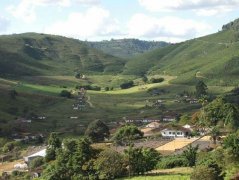
How to grow coffee quality will be better coffee planting microenvironment introduces the origin of coffee trees in Ethiopia, Africa. In botany, coffee trees belong to the evergreen trees of the subgenus Rubiaceae, and coffee beans, commonly known as coffee beans, are the seeds of the fruit of coffee trees, just because they are shaped like beans, so they are called coffee beans. Climate is the decision of coffee cultivation.

The flavor and taste of Colombian beans introduction to the manor of grinding scale planting environment
The Flavor and Taste characteristics of Colombian beans; Grinding scale planting Environment the Jade Manor is located in Boyaca Province, Colombia, with an average altitude of 1230m, an average temperature of 22 and a rainfall of 1870ml. 2.62 ha 90% Castijue tree species in the second half of the harvest season, shade planting, traditional natural degumming treatment, with 4C certification, rainforest certification and UT

What is the treatment of golden honey in Sanhe producing area of Costa Rica? Variety and planting environment? Is it good?
What is the treatment of golden honey in Sanhe producing area of Costa Rica? Variety and planting environment? Is it good to cook? Costa Rica, the happiest country in the world, is also known as the Switzerland of Latin America, because it is the only country without an army. It is also the most developed country in Central and South America, which borders Nicaragua in the north, Panama in the south and the Atlantic and Pacific Ocean in the east and west. The plains are mostly distributed along the coast.

Panamanian coffee growing environment
Growing environment Panama is a small country located in the center of the American continent. The waters of the Atlantic and Pacific oceans flood its beaches. Panama is located at 9 degrees north latitude, the meeting point of the Central Mountains, where Mount Baru, one of the highest volcanoes in Central America, is located. The Baru volcano has an altitude of more than 11400 feet, and the land around it is rich in nutritious and fertile soil.

Introduction to the planting environment of Ethiopian coffee
Due to different planting methods, coffee can be divided into three types: forest-semi-forest coffee (Forest or semi-forest coffee), courtyard coffee (Garden coffee) and plantation coffee (Plantation coffee). 60% of the coffee belongs to forest-semi-forest coffee. In such a wild coffee forest, pesticides are not used at all, but biological methods are used to control pests. 35%

Brazilian Coffee Manor and Taste planting Environment Variety treatment Regional Grinding scale
Brazilian Coffee Manor and Taste growing Environment Variety treatment area Grinding scale Brazilian Coffee is a low-acidity, moderately roasted coffee bean from the World Coffee Center. As a kind of high-quality coffee, Brazilian coffee can be drunk individually or mixed. ● quality beans: Sangdo-style NO.2, size NO.18 ● flavor characteristics: mild, bitter medium, soft flavor. ● is the best

Introduction to the planting environment of coffee trees in flowering and fruiting cycle
The general taste of robusta beans is poor, the caffeine content is 2 to 3 times that of Arabica beans, and the price is cheap, mostly for the production of instant coffee or low-cost comprehensive products by the large-scale coffee industry. Coffee trees planted in Arabica are suitable for growing on fertile slopes with good drainage at an altitude of about 1000 to 2,000 meters.

Introduction to the planting environment of coffee trees in Guatemala
The coffee planting base in Guatemala faces severe landscape changes and shrinking habitats, and more than 90 species of migratory birds have found refuge in shaded trees. In early autumn (north temperate zone), birds such as Nashville warbler (Vermivoraruficapilla), wide-winged eagle (Buteo swordfish), crested flycatcher (Myiarchuscrinitus), lovely summer Donna Finch (Piranga Waxberry), Raptors

The characteristics of Yellow Bourbon Coffee A brief introduction to the planting Environment of Queen's Manor in Brazil
The Bourbon species, native to the Indian Ocean island of Bourbon (now known as R é union Island), is the second species caused by the Typica mutation. It belongs to the oldest existing coffee variety with the green fruit showing bright red when ripe, while the bourbon species is hybridized with other varieties. Because of its low output

A brief introduction to the taste treatment method of planting environment and flavor description of Lazimus coffee beans in Colombia
A brief introduction to the Flavor description of the planting Environment and Flavor of Colombian Lazimus Coffee beans the suitable climate in Colombia provides a real natural pasture for coffee. Coffee trees in Colombia are mainly cultivated in the Andes, on steep slopes about 1300 meters above sea level, where the annual temperature is about 18 degrees Celsius, annual rainfall is 2000 to 3000 millimeters, and north latitude 1.

What is the flavor of Burundian coffee? What is the flavor trend of the cup test? What is the planting environment?
Professional coffee knowledge exchange more coffee bean information please follow the coffee workshop (Wechat official account cafe_style) Burundian coffee flavor characteristics? What is the flavor trend of the cup test? What is the planting environment? Burundi) is a small and beautiful landlocked country, located at the intersection of Central Africa and East African countries, is the watershed between Africa's great Nile and Congo River, can be seen in Burundi

What kind of environment is most suitable for planting coffee trees?
The planting conditions of coffee trees, however, not all the land located in this area can produce good coffee trees. The ideal planting conditions of coffee trees are as follows: the temperature is between 15 ℃ and 25 ℃, and the annual rainfall must reach 1500 mm to 2000 mm. At the same time, the rainfall time should be in line with the flowering cycle of coffee trees. Of course, except for the matching of seasons and rainfall

Introduction of Nicaraguan coffee with a unique environment and fertile volcanic soil
Madriz is an ecological coffee with a very hard shell. In the pure natural planting environment, it uses more complex operations to maintain the delicate aroma and taste of the coffee; it is produced in northern Nicaragua between Matagalpa and Jinotega, with an average annual rainfall of 1500-1700mm and a temperature of 20-29 degrees Celsius. All use manual selection of coffee.

Panamanian coffee growing environment
Growing environment Panama is a small country located in the center of the American continent. The waters of the Atlantic and Pacific oceans flood its beaches. Panama is located at 9 degrees north latitude, the meeting point of the Central Mountains, where Mount Baru, one of the highest volcanoes in Central America, is located. The Baru volcano has an altitude of more than 11400 feet, and the land around it is rich in nutritious and fertile soil.

Panamanian coffee growing environment
Growing environment Panama is a small country located in the center of the American continent. The waters of the Atlantic and Pacific oceans flood its beaches. Panama is located at 9 degrees north latitude, the meeting point of the Central Mountains, where Mount Baru, one of the highest volcanoes in Central America, is located. The Baru volcano has an altitude of more than 11400 feet, and the land around it is rich in nutritious and fertile soil.

A brief introduction to the characteristic description of Bolivian Coffee Flavor Manor with unique planting Environment
Bolivia has made a lot of efforts to improve the quality of coffee, stimulate the enthusiasm of coffee farmers and make coffee farmers have a deeper understanding of fine coffee. After the introduction of the COE competition, in the first COE competition held in 2004, there were 13 boutique bean cups with a total score of more than 84 points, and the champion bean score was as high as 90.44 points.

How do you drink Hawaiian Kona coffee? How is the planting environment? Which do you want to buy?
How do you drink Hawaiian Kona coffee? How is the planting environment? Which do you want to buy? Kona coffee beans, which are grown in the Kona region of Hawaii, are a rare species that can only be grown on volcanic slopes. In addition to its beautiful scenery, Hawaii, a beautiful tropical Pacific island, also produces the famous Kona coffee. Because the main producing area of Kona coffee is located in the south and north of the main island

Introduction to the Variety characteristics of Brazilian Coffee Bean picking season-planting Environment Flavor description method
Brazilian Coffee Bean picking season-planting Environment Flavor description treatment Variety characteristics A coffee tree's vigorous production period usually lasts about 15 years, of course, some trees are still fruitful for 20 or 30 years. As soon as the coffee tree loses its ability to bear fruit, it will be cut down on the spot and uprooted so as not to compete for nutrients with other trees that are still strong and can bear fruit. Coffee production is related to the types and types of coffee trees

Introduction to the quality and taste of Kenyan coffee planting environment flavor description treatment
Kenyan coffee planting environment flavor description treatment quality taste introduction Kenyan coffee is generally grown by small farmers. After they harvest coffee, they usually send fresh coffee beans to cooperative cleaning stations. The washed and dried coffee is sent to the cooperative in the form of parchment coffee beans (that is, coffee beans covered with endocarp) to the cooperative (parchment coffee beans are peeled before coffee beans are peeled.